
Paddle vs Chargebee
De-risk your revenue and reduce operational costs
With Chargebee, you still need separate providers for payments, tax, and compliance. Paddle brings it together under its Merchant of Record model, reducing your total cost of ownership by up to 25%.


Four reasons Chargebee customers move to Paddle

Chargebee's billing limitations create more work for their team
Consolidated invoicing across customer IDs, tiered pricing for different segments, coupon flexibility on existing subscriptions — all have gaps that create manual workarounds. Paddle's billing is built to remove that overhead, not create it.
Limited payment methods means lost customers
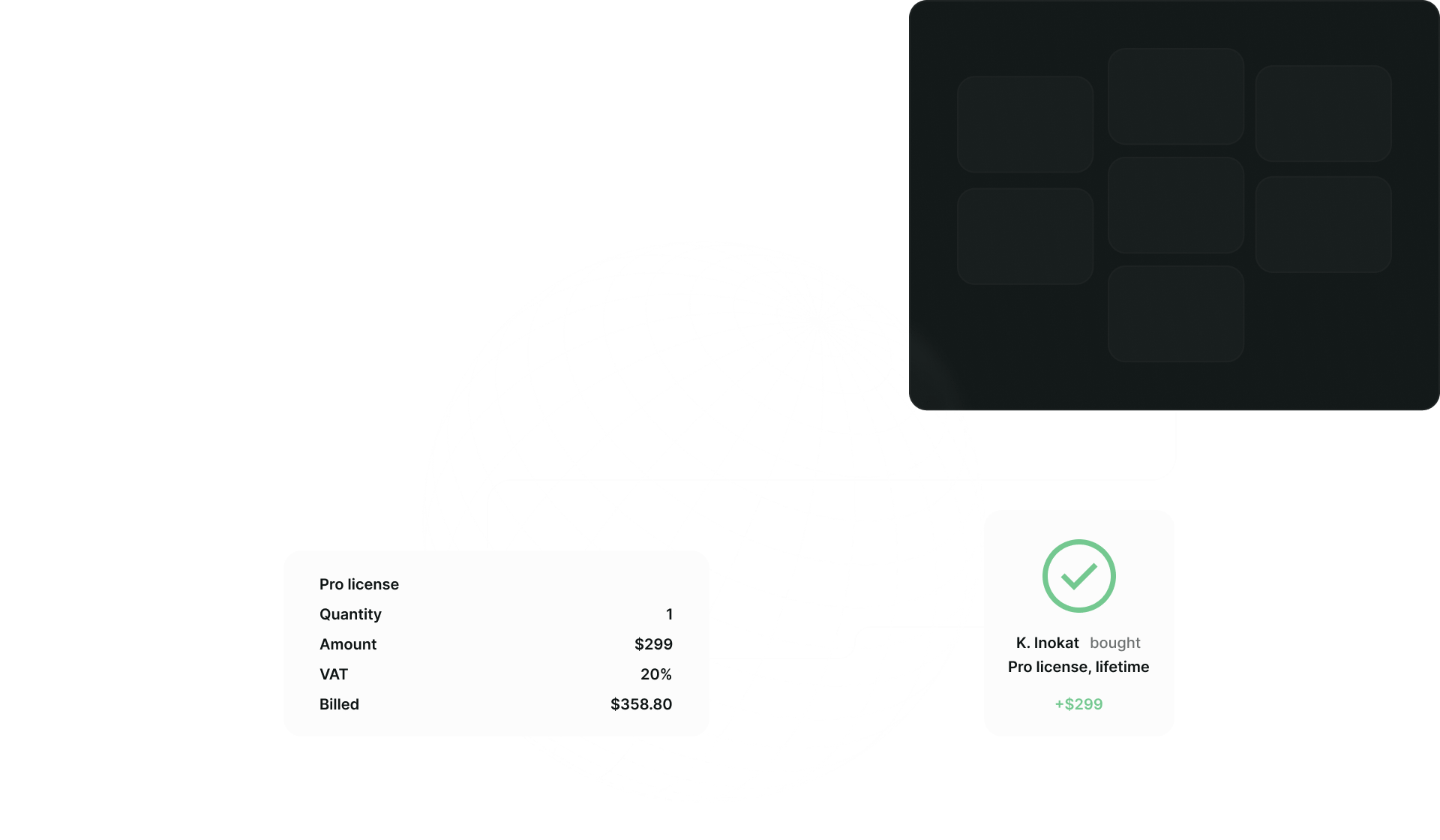
Customers in the Netherlands, India, and across Europe expect local payment options, and without them, they drop off. Adding a new processor takes months of back-and-forth; Paddle comes with 30+ local payment methods built in, no configuration required.
The real cost of Chargebee is harder to see upfront
Chargebee's churn tool is a paid add-on that make your true cost hard to forecast. Paddle is 5% + 50¢ per transaction (with custom pricing for high growth companies). Everything included, no surprises.
Chargebee calculates tax. It doesn't pay it
Selling globally or across US states means tax registrations, filings, and remittance - none of which Chargebee handles. Paddle is your Merchant of Record: tax liability is ours across 180+ countries and all US states, not yours.
"Switching from Chargebee to Paddle meant we could remove other tools to manage billing. This, along with the time we are saving our development, finance and legal teams, means we've cut billing costs by 15%."

Chargebacks managed end-to-end
Chargebee's own documentation states that many chargeback scenarios require manual intervention from the merchant - you're still liable for dispute fees and resolution time. As your Merchant of Record, Paddle absorbs that liability entirely.
Revenue recovered before it's lost, not after
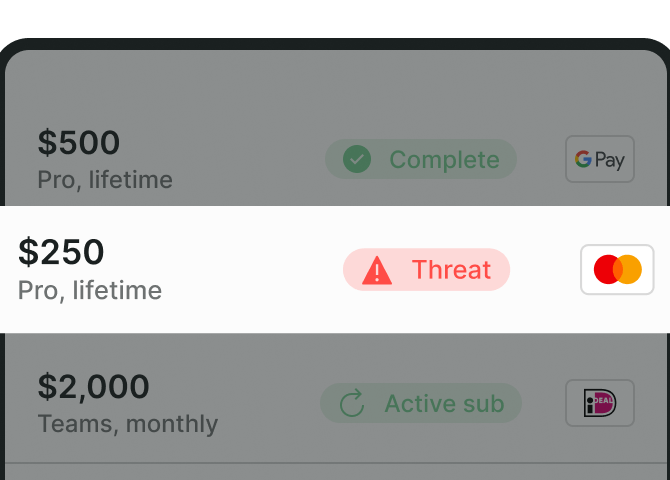
Not only do you have to pay extra for Chargebee's retention and churn tools, but Chargebee discovers card failures only after an invoice has already declined. Paddle flags expiring cards before they fail, and Retain runs intelligent retry logic automatically - without your team having to chase it.

Move to Paddle in 12 days or less
Dedicated migration support, from kickoff to go-live, trusted by large enterprises. Learn more
Phase 1: Set up
Scope and configure Paddle (Day 1-2)
Phase 2: Build and validate
Implement key flows and test safely using the webhook simulator (Day 3-7)
Phase 3: Go live and migrate
Run new customers on Paddle and migrate legacy subscriptions in parallel (Day 8-12)